Dr. Mary Amoako Joins World Young Scientist Summit, Highlights AI’s Role in Building Sustainable Food Systems
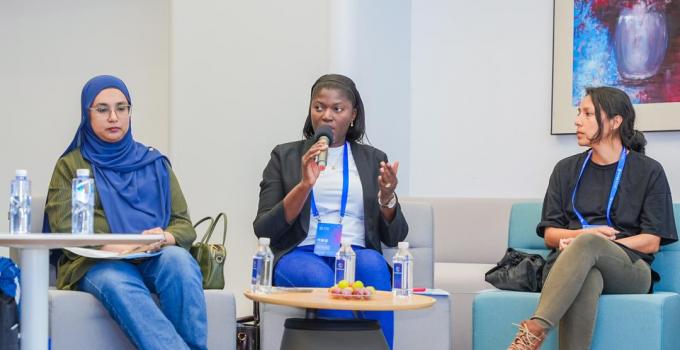
Dr. Mary Amoako of the Department of Biochemistry and Biotechnology at the Kwame Nkrumah University of Science and Technology (KNUST) has joined scientists from across the globe at the World Young Scientist Summit (WYSS) in Wenzhou, China, to explore how artificial intelligence (AI) can advance scientific research and support sustainable development.
The summit featured a roundtable discussion on “AI + Smart Agriculture and Food Development,” bringing together young scientists from different countries to examine how AI could improve agricultural practices and food systems.
The discussion explored the potential of AI-driven research and international collaboration to support smarter agriculture, improve food safety, reduce food losses and promote sustainable food systems.
In her submission, she emphasised that food security spans the entire food system, from seed science and food production to storage, consumption, and waste management, with food safety being an integral component.
She highlighted the potential of integrating climate and food-system data with AI to predict how rising temperatures and other environmental changes affect food quality, spoilage, and safety, informing sustainable solutions to reduce food losses.
Drawing on her experience working with farmers and households, she also emphasised the importance of translating research findings into practical, accessible information for the farmers and households who need them most, rather than limiting dissemination to academic journals.
Ultimately, research has the greatest impact when evidence reaches the people who can use it to improve their livelihoods, food security, and well-being.
The World Young Scientist Summit (WYSS) 2026 was held in Wenzhou, China, bringing together nearly 800 participants from more than 60 countries and regions, with scientists and other young professionals under the age of 45 accounting for 88% of attendees.
Held under the theme “Gathering Talents Worldwide to Create a Better Future,” and guided by the annual agenda “Global Youth Action in the AI Era: Building a Sustainable Future,” the summit explored how scientific innovation, artificial intelligence and international collaboration can contribute to sustainable development.
The session was moderated by Dr Jingtao Liliu, Principal Investigator at Oujiang Laboratory and Head of Biomedical Big Data. Other panellists included Dr Neema Nduma of the Nelson Mandela African Institution of Science and Technology, Tanzania, and Professor Badr-Eddine Kartah of Mohammed V University, Rabat, Morocco, alongside scientists from Iraq, Bangladesh, Malaysia and Brazil.
The 2026 edition also featured the participation of young scientists affiliated with The World Academy of Sciences (TWAS) and the Organisation for Women in Science for the Developing World (OWSD), creating further opportunities for scientific exchange and international collaboration.